Shop / Semaglutide
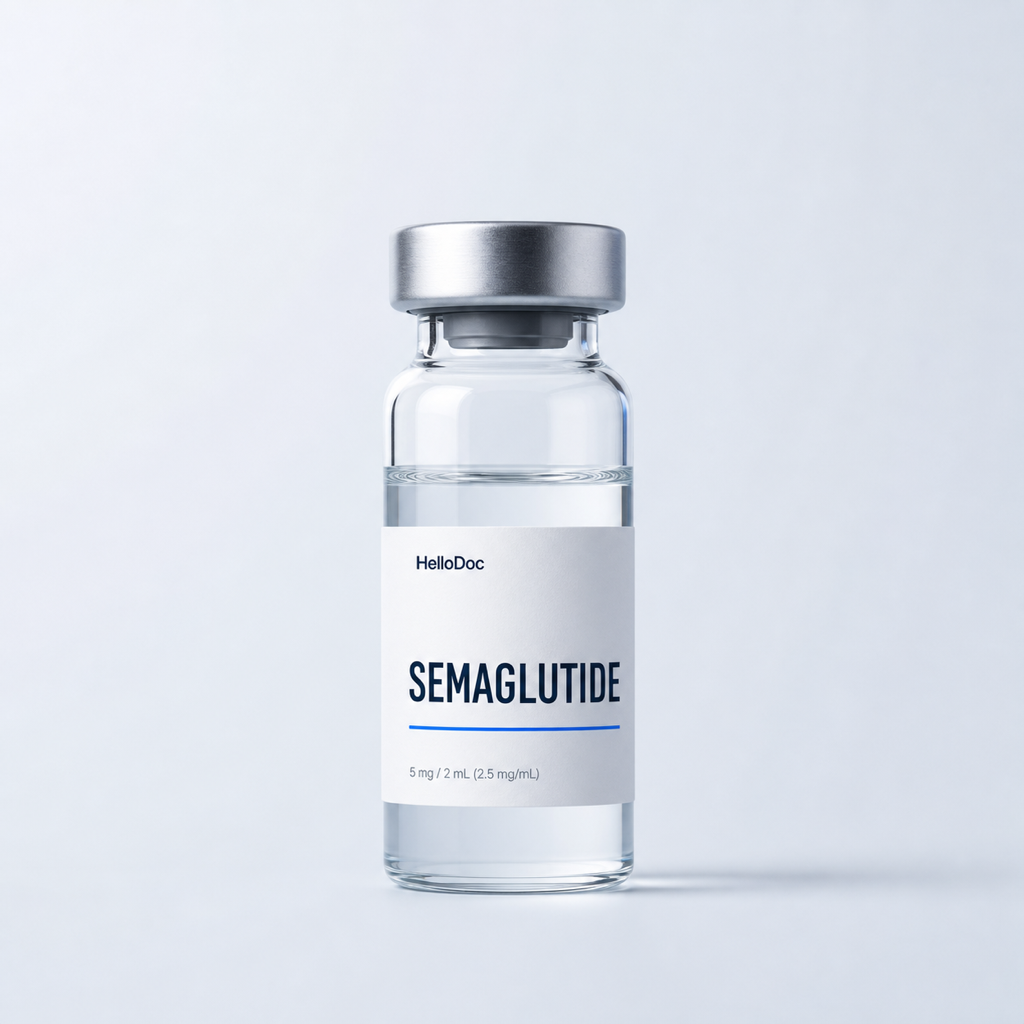
Semaglutide
GLP-1 receptor agonist
Semaglutide is a GLP-1 receptor agonist. It mimics a hormone your gut already makes after eating, which is why the effect people describe most often is simply not thinking about food between meals.
Dosing starts deliberately low. The first four weeks at 0.25mg are not a therapeutic dose — they exist so your stomach adapts before the dose climbs. Skipping ahead is the single most common reason people quit with nausea.
Your clinician sets the actual schedule. This is the standard ladder and the one they start from.
Multiple large randomised controlled trials in people, published in peer-reviewed journals, with regulatory approval behind them.
Mean body-weight change at 68 weeks on 2.4mg weekly, against −2.4% on placebo
STEP 1 · NEJM 2021Reduction in major adverse cardiovascular events across 17,604 patients
SELECT · NEJM 2023Achieved resolution of steatohepatitis at 72 weeks, against 34.3% on placebo
ESSENCE · NEJM 2025What it is
Semaglutide is a GLP-1 receptor agonist — a synthetic analogue of a hormone your gut already releases after a meal. FDA-approved for type 2 diabetes in 2017, for chronic weight management at 2.4mg weekly in 2021, and in March 2024 for reducing cardiovascular risk.
How it works
GLP-1 does three things at once: it prompts glucose-dependent insulin release, slows gastric emptying, and acts on appetite centres in the hypothalamus. The effect people describe is the third one — food stops occupying so much of the day.
What the evidence actually says
-
2021
STEP 1
1,961 adults. Mean −14.9% body weight at 68 weeks versus −2.4% on placebo; 86% lost at least 5%. The trial that established the weight-management dose.
-
2023
SELECT
17,604 adults with cardiovascular disease and no diabetes. A 20% reduction in cardiovascular death, non-fatal MI or non-fatal stroke — the first outcome trial showing this class prevents events, not just weight.
-
2024
FDA label expansion
Approved in March to reduce cardiovascular risk in adults with established cardiovascular disease who are overweight or obese.
-
2025
ESSENCE
1,197 patients with biopsy-confirmed MASH. At the 72-week interim, 62.9% reached resolution of steatohepatitis without worsening fibrosis, against 34.3% on placebo.
What the first months look like
- Weeks 1–4A deliberately sub-therapeutic 0.25mg. This month is about letting your stomach adapt, not losing weight.
- Weeks 5–12Steps up every four weeks. Appetite changes usually land here, and so does nausea if it comes — typically in the days after a step-up.
- Month 4+Maintenance. In STEP 1 weight was still falling at 68 weeks rather than plateauing early.
Who this is not for
- A personal or family history of medullary thyroid carcinoma, or MEN2 — a boxed contraindication, not a caution.
- Pregnancy, or planning pregnancy within two months.
- A previous episode of pancreatitis, without a prescriber reviewing it first.
Sources
- Wilding JPH et al. Once-Weekly Semaglutide in Adults with Overweight or Obesity. N Engl J Med 2021;384:989–1002.
- SELECT: Semaglutide Reduces Risk of MACE in Adults With Overweight or Obesity — American College of Cardiology.
- Phase 3 Trial of Semaglutide in Metabolic Dysfunction–Associated Steatohepatitis. N Engl J Med 2025;392:2089.
Figures are quoted from the published trials and were last checked in August 2026. We update this page when the evidence changes.