Shop / BPC-157
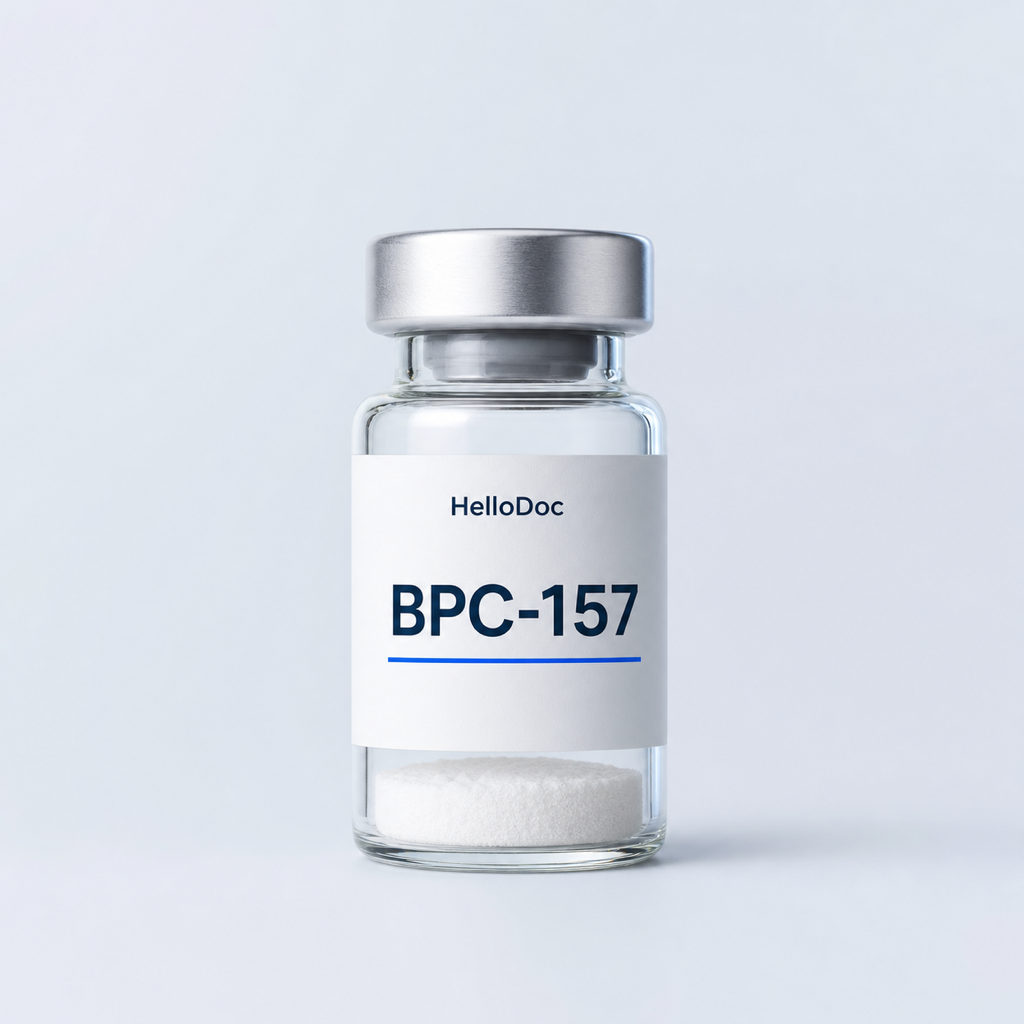
BPC-157
Repair peptide
BPC-157 is a synthetic fragment of a protein found in gastric juice. It is used as a recovery adjunct — most people run it alongside physical therapy rather than instead of it.
Note the ladder: it ends. This is a course with a taper, and a physician will decline to renew it indefinitely.
Your clinician sets the actual schedule. This is the standard ladder and the one they start from.
Almost all published data is from animal or laboratory work. No completed human efficacy trial has been published.
People studied across three small pilot trials — no completed human efficacy trial has been published
PubMed, Aug 2026FDA bulk-substance category since Sept 2023: may present significant safety risks, not permitted in 503A compounding
FDAWADA classification — prohibited in sport at all times as a non-approved substance
WADAWhat it is
BPC-157 is a synthetic 15-amino-acid peptide, a fragment of a protein found in human gastric juice — hence the name, Body Protection Compound. It is not approved by the FDA for any indication, in any country.
How it works
In rodent models it appears to promote angiogenesis — new blood vessels growing into healing tissue — and to interact with nitric oxide and growth-factor pathways involved in tendon and ligament repair. Whether that translates to humans at a comparable dose is genuinely not established.
What the evidence actually says
-
2018
Preclinical review
A synthesis of the animal literature on angiogenesis and tendon healing. Almost all of it originates from one research group, which is a real limitation on how much weight it can carry.
-
2023
FDA Category 2
Placed on the 503A list of bulk substances that may present significant safety risks, citing immunogenicity concerns for certain routes and difficulty characterising peptide impurities. Licensed 503A pharmacies cannot compound it.
-
2026
Human data, still
Phase 1 work is described as underway by the originating group. As of August 2026 no completed human efficacy trial has been published. Roughly thirty people have been studied in total.
What the first months look like
- Weeks 1–2A lower introductory dose while tolerance is assessed.
- Weeks 3–6The working dose, run alongside physical therapy rather than instead of it.
- Weeks 7–8A deliberate taper. The schedule ends — this is a course, not maintenance.
Who this is not for
- Anyone subject to drug testing in sport. Prohibited at all times under WADA S0.
- Anyone with an active or previous cancer diagnosis — the angiogenic activity proposed as the benefit is a theoretical risk here.
- Pregnancy or nursing.
- Anyone expecting the evidence base of a GLP-1. It is not comparable, and this page is not going to pretend otherwise.
Sources
- Seiwerth S et al. BPC 157 and Standard Angiogenic Growth Factors. Curr Pharm Des, 2018 — review of the preclinical literature.
- FDA: Bulk Drug Substances Used in Compounding Under Section 503A of the FD&C Act.
- WADA Prohibited List — S0, non-approved substances, prohibited at all times.
Figures are quoted from the published trials and were last checked in August 2026. We update this page when the evidence changes.